
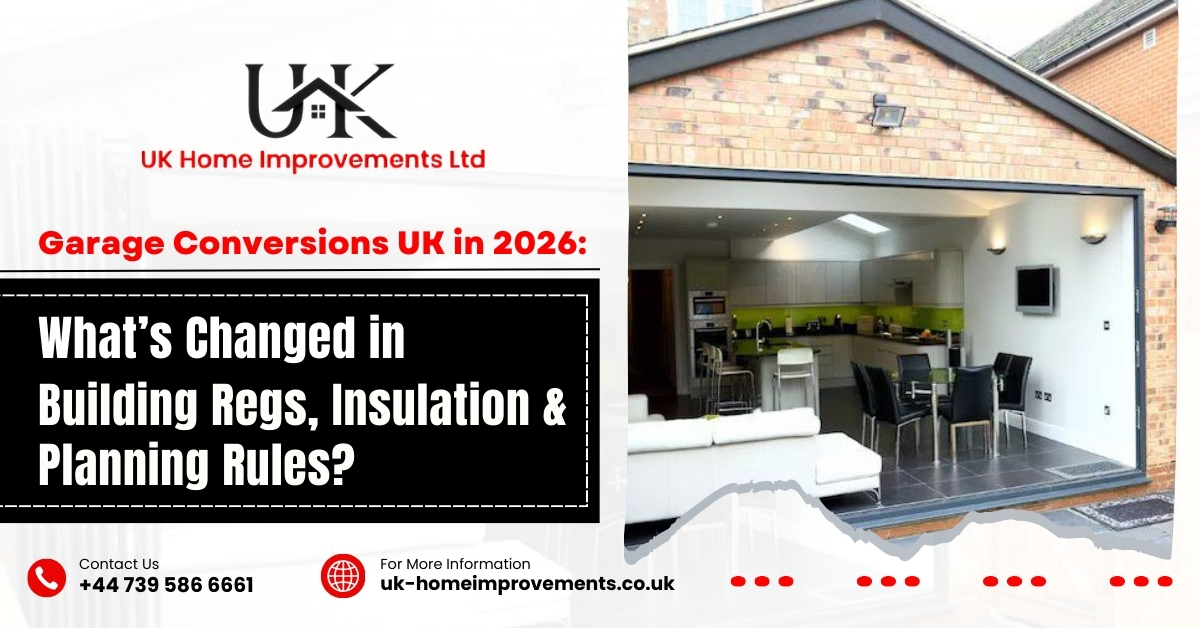
Garage Conversions UK in 2026: What’s Changed in Building Regs, Insulation & Planning Rules?
It looks like garage conversions are still one of the most affordable ways to increase your living space, and the desire for these across the UK in 2026 is greater than ever. A combination of rising house prices, work-from-home lifestyles, and limited extension opportunities due to planning controls has made garage conversions the number one choice for home improvements in the UK.
That said, 2026 is bringing along some significant updates to the building regulations, insulation standards, and planning rules that are essential for any homeowner to be aware of before initiating a project. In case you are thinking about a
garage conversion in the UK
or turning a garage into a bedroom, then this guide is just for you, as it goes over the changes and their implications on your construction.1. Planning Rules in 2026: What You Need to Know
Apart from certain spots, turning a garage into a room usually skips the need for formal approval throughout much of the UK. Still, councils have started clamping down on how these converted spaces can be used.
Beyond next year’s horizon, property owners face new thinking. One shift arrives with calendar changes. Each choice ties to future demands. Not every detail fits today’s habits. Some adjustments wait until the seasons turn. Decisions now ripple forward. What feels distant grows nearby then
Garage changes could mean less space for cars on the street. One council may ask for proof that it won’t make parking harder nearby. Permission often depends on showing no added strain. What matters is how it affects curb spots down the block. A town office usually checks if the streets stay clear after the shift.
Ahead of any work, check local rules. Chances are high you’ll need approval. Old neighborhoods often have strict limits. Think twice before starting changes. Past decisions might still shape what happens now.
Most fresh housing developments come with rules blocking garage changes. Though built recently, these properties can’t always adapt spaces freely. Where construction is latest, permission often stays restricted. Even brand-new builds might lock out modifications by design. Rules set at approval time tend to hold firm after move-in.
Most of the time, guidelines stay pretty much the same – yet local offices now check every detail closely. Before turning a garage into living space, it helps to confirm whether approval is needed for your home.
2. Building Regulations: Stricter Than Ever
Building Regulations approval is compulsory for any garage conversion in the UK, and by 2026, the standards of compliance will be even more demanding than before.
Main points include:
- Structural safety (and most importantly, where garage doors are removed).
- Fire safety, e.g., fire-resistant doors and escape routes
- Ventilation and moisture control
- Soundproofing, especially when the garage is attached.
Comfort stays steady through every season when turning a garage into a sleeping room, following set rules. A bed space needs proper air flow, enough square footage, also warmth to count as livable.
3. Insulation Standards Have Increased in 2026
One of the most significant changes affecting garage conversions UK is that insulation performance expectations have been raised.
Since garages were never meant to be living spaces, insulation upgrades are now quite substantial:
- Walls have to comply with stricter U-value requirements. In many cases, floors need insulated overlays.
- Roof and ceiling have to be able to stop heat loss and condensation
- Thermal bridging around doors and windows has to be eliminated. In 2026, if you decide to skimp on insulation, then you may face failed inspections, increased energy bills, and discomfort in the rooms.
No matter if you’re turning your garage into a bedroom, a home office, or a living room, the use of up-to-date insulation is a must.
4. Energy Efficiency & Sustainability
Considering the UK’s continuous energy efficiency drive, any garage conversion would have to go hand in hand with the general sustainability objectives.
By 2026, Building Control will be focusing more and more on:
- Energy-efficient windows
- Better airtightness
- Low energy heating
- Correctly working with the existing heating system
A well-conducted garage conversion in the UK can greatly enhance the EPC rating of your property, thus becoming more alluring both to potential buyers and to tenants.
5. Why Professional Garage Conversions Matter More in 2026
As regulations are constantly changing, it is even riskier than before to do a DIY or poorly managed conversion. Non-compliant work may result in:
- Failed inspections. Lower property value.
- Problems at resale
- Expensive repair work
A well-built garage conversion often comes from skilled hands. When experienced builders take charge, meeting current UK rules becomes easier. Fewer setbacks pop up along the way. The finished room stands strong, built to endure many years of daily life.
Final Thoughts
A home’s worth can grow sharply when the garage becomes rooms people live in – this stays true for 2026, yet success hides in how it’s handled. Tougher rules now shape construction, since energy efficiency matters more, inspections dig deeper, plus approvals face longer waits before moving forward.
A fresh coat of paint isn’t always what matters – when turning your garage into a bedroom, making sure it follows current rules shapes how cozy, safe, and kind to energy bills the space becomes. Though tucked away or once just storage, even an office grown out of an old parking spot need’s structure that breathes right, holds warmth well, and keeps life inside steady through seasons. Besides, it will also safeguard your property value in the long term and spare you from expensive troubles later on.
A well-done garage conversion in the UK is not just about adding extra square feet; it is about creating a future-ready home.